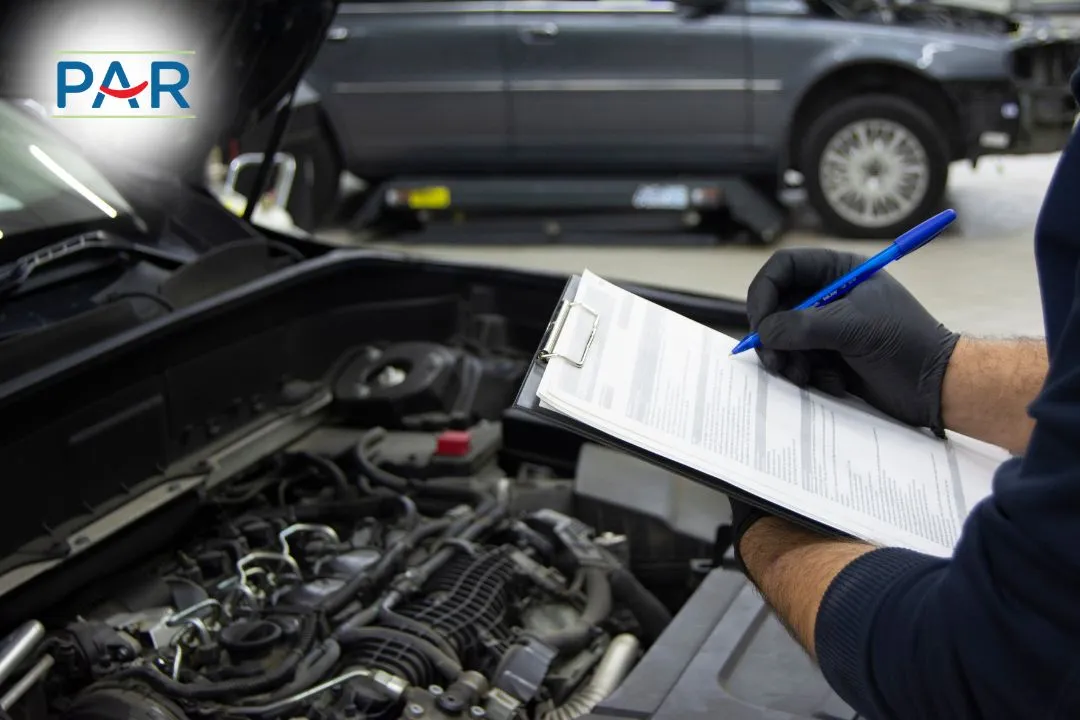
How much does it cost your company when one operational car breaks down in the middle of a client visit schedule? The cost rarely stops at towing and workshop fees. Deliveries are delayed, meetings are canceled, drivers sit idle, and a replacement unit has to be found at short notice, often at a high price. Most incidents like this can actually be prevented with one habit: staying disciplined about the car's periodic service schedule based on mileage intervals.
Many fleet managers still think periodic servicing is just about changing the oil. In fact, each interval has a different list of tasks, from replacing filters and brake fluid to inspecting the suspension. Company cars also work much harder than private cars. Their monthly mileage is high, they are driven in turns by several people, and they often get stuck in heavy traffic. That is why the service guidelines in the owner's manual need to be reinterpreted to match the fleet's working patterns.
This article provides a complete guide to operational car maintenance: a periodic service schedule table by kilometer, the components that must be checked at each interval, how company cars should be treated differently from private cars, how to build a corporate fleet maintenance SOP, estimated annual service costs for company cars, and the impact of late servicing on downtime.
Periodic servicing is not just a technical matter for the workshop. For companies, vehicle maintenance is directly linked to three things: safety, compliance, and cost efficiency.
In terms of compliance, Law No. 22 of 2009 on Road Traffic and Transportation requires every motor vehicle operating on the road to meet technical and roadworthiness requirements. The technical provisions are then detailed in Government Regulation No. 55 of 2012 on Vehicles, including the minimum tire tread depth. Poorly maintained company vehicles not only risk breaking down but can also create legal and reputational problems for the company.
In terms of cost, scheduled maintenance is almost always cheaper than emergency repairs. Worn components can be replaced before they damage other parts, making spending easier to predict and budget for.
Manufacturers generally recommend servicing every 10,000 km or six months, whichever comes first. This "whichever comes first" rule matters. A car that is often stuck in traffic may not reach 10,000 km in six months, but its engine still works hard because it spends long periods idling with less than optimal cooling. Conversely, an intercity operational car can pass 10,000 km in just two months, so it must be serviced without waiting for six months.
The table below gives a general overview for gasoline-powered passenger cars. The manufacturer's manual remains the main reference, as each model has different specifications.
Interval | Time Equivalent (Normal Use) | Category | Main Tasks |
|---|---|---|---|
10,000 km | 6 months | Minor service | Change engine oil and oil filter, check fluids, rotate tires, check battery and lights |
20,000 km | 12 months | Intermediate service | 10,000 km items + replace air filter and cabin filter, check spark plugs and brake pads, wheel alignment and balancing |
40,000 km | 24 months | Major service | 20,000 km items + change transmission oil and brake fluid, flush radiator, replace fuel filter, full suspension inspection |
80,000 km | 48 months | Extended major service | 40,000 km items + replace long-life spark plugs, check or replace timing belt (belt-driven engines), check suspension and clutch |
This pattern repeats. The 30,000 km and 50,000 km marks generally follow the minor service list, 60,000 km follows the intermediate service, and so on.
Components replaced: Engine oil and oil filter. Oil that has been used for a long time loses its ideal viscosity due to heat and particle contamination, which weakens the protective layer between engine components.
Components inspected: Coolant level, brake fluid, power steering fluid (if applicable), and washer fluid. The technician also checks tire pressure and wear, rotates the tires so they wear evenly, and checks the condition of the battery, lights, horn, and wipers.
Components replaced: Engine air filter and AC cabin filter. A clogged air filter leads to incomplete combustion, making the car feel sluggish and increasing fuel consumption. A dirty cabin filter lowers air quality for the driver and passengers.
Components inspected: Spark plugs are cleaned or replaced depending on their type. Brake pad thickness starts being measured, and wheel alignment and balancing are carried out to keep the vehicle stable and prevent uneven tire wear.
Components replaced: Transmission oil (manual or automatic, as recommended by the manufacturer), differential oil for rear-wheel-drive cars, brake fluid, fully flushed radiator coolant, and the fuel filter.
Components inspected: The entire braking system, the drive belt, and suspension components such as shock absorbers, ball joints, tie rods, and bushings. At this interval, decisions on replacing major components usually start to come up, so the budget should be prepared from the start of the year.
Aspect | Private Car | Company Car |
|---|---|---|
Mileage | Around 10,000 to 15,000 km per year | Can reach 30,000 to 60,000 km per year |
Users | One or two people | Several drivers taking turns |
Usage pattern | Irregular | Daily, often under heavy conditions |
Impact of a breakdown | Limited to the owner | Disrupts company services and productivity |
A private car may only reach 10,000 km after six months. A company car that covers 3,000 to 5,000 km per month can get there in two to three months. This means the service schedule must be monitored using weekly odometer readings, not the calendar.
Stop-and-go city driving, the AC running for hours while waiting, full loads, and damaged roads at project sites all count as heavy-duty use. Many owner's manuals provide a special schedule for these conditions with shorter intervals. In practice, some fleet managers change the engine oil every 5,000 to 7,500 km for units that work hard.
Different driving styles speed up component wear, while responsibility for the unit's condition is often unclear. That is why company cars need daily inspections, handover records, and structured damage reporting.
An SOP ensures maintenance does not depend on one person's memory. Here are the steps to build one.
Record the make, type, year, license plate number, latest odometer reading, service history, warranty period, tax, and insurance. This data forms the basis of every maintenance decision.
Group units based on usage patterns, for example intercity units, city units, and backup units. Each group is given its own mileage and time interval based on the "whichever comes first" principle.
Create a pre-use inspection checklist covering oil, radiator water, tire pressure, lights, brakes, and dashboard indicators. This simple checklist is often the most effective form of early detection.
Use a spreadsheet or fleet management app to monitor odometer readings and send notifications when a unit is approaching its service schedule. Stagger the schedule so that not too many units go into the workshop at the same time.
Choose workshops with clear work standards, use genuine or equivalent spare parts, and agree on a maximum turnaround time for each type of service.
A backup unit ratio helps keep services running when main units are being serviced or repaired.
Monitor indicators such as service schedule compliance rate, unit availability percentage (uptime), frequency of unexpected breakdowns, and maintenance cost per kilometer. Review the results every quarter to improve the SOP.
The following is an illustration of company car service costs for one gasoline MPV covering around 40,000 km per year. These figures are estimates and may vary depending on the model, region, workshop, and latest spare part prices.
Cost Item | Frequency per Year | Estimated Cost |
|---|---|---|
Minor service (10,000 and 30,000 km) | 2 times | Rp1.2 to 2.4 million |
Intermediate service (20,000 km) | 1 time | Rp1 to 2 million |
Major service (40,000 km) | 1 time | Rp2 to 4.5 million |
One set of tires | Around 1 time | Rp3 to 5 million |
Battery (allocation, 1.5 to 2-year lifespan) | 0.5 times | Rp400,000 to 600,000 |
Brake pads and wheel alignment/balancing | As needed | Rp800,000 to 1.5 million |
Unexpected repair reserve | As needed | Rp1 to 2 million |
Total | Rp9.4 to 18 million |
Based on these assumptions, maintenance costs range from Rp235 to 450 per kilometer. Calculating the cost per km is very useful for comparing efficiency between units and deciding when a vehicle has become too expensive to keep.
Oil that is changed late accelerates wear on engine components. Coolant that is not checked can trigger overheating, which in severe cases damages the cylinder head gasket. Worn-out brake pads can grind down the brake discs, multiplying repair costs.
Scheduled servicing is usually finished within hours and can be arranged outside peak hours. A sudden breakdown can keep a unit off the road for days, especially if spare parts have to be ordered first.
Suppose one unit suffers engine damage due to late servicing and is out of action for five days. Renting a replacement unit at Rp500,000 per day adds up to Rp2.5 million, not including engine repairs that can reach more than ten million rupiah. Compare that with an on-time minor service that costs around Rp1 million. Indirect losses, such as idle drivers and disappointed clients, are often even greater than the figures on paper.
Unroadworthy vehicles put drivers, passengers, and other road users at risk, and also expose the company to traffic violations.
During the warranty period, servicing at an authorized workshop is recommended so that warranty claims remain valid. After the warranty ends, a trusted general workshop using genuine or equivalent parts can be a more efficient option.
Electric cars do not need engine oil, spark plug, or fuel filter replacements. Maintenance focuses on battery health, the battery cooling system, brakes, tires that tend to wear faster due to the vehicle's weight, and software updates.
Calculate the total cost of ownership, including the purchase price, depreciation, maintenance, insurance, taxes, administration, and management staff. Long-term rental turns fluctuating costs into a fixed monthly cost, while maintenance is handled by the provider.
The periodic service schedule for company cars needs to be stricter than for private cars. Use the 10,000, 20,000, and 40,000 km intervals as the basic framework, apply the "kilometers or time, whichever comes first" principle, and shorten the intervals for units working under heavy conditions. Complement this with a clear SOP, daily inspections by drivers, and cost per kilometer monitoring. That way, corporate fleet maintenance becomes more measurable, downtime decreases, and the budget is easier to control.
If your team wants to focus on its core business without the hassle of workshop matters, Prima Armada Raya can be the right partner. Through PRIMA Fleet Services, companies can rent operational vehicles on a long-term basis, with every unit regularly maintained and backed by authorized workshops, replacement car services, and 24-hour customer service. For company-owned fleets, PRIMA Autocare & Sales is ready to help with vehicle maintenance and repairs.