Is a valid driver's license (SIM) enough to prove that someone is fit to drive the board of directors or take an operational car out every day? Many companies say "yes," only to realize their mistake after repeated traffic tickets, passenger complaints, or ballooning insurance claims. The right way to hire company drivers does not stop at checking a license card. The process covers screening qualifications, verifying track records, on-road practical tests, and drafting an employment contract that complies with labor regulations.
The reason is simple. Data from the Indonesian National Police Traffic Corps (Korlantas Polri) in 2026 shows that 61 percent of traffic accidents in Indonesia are caused by human factors, while vehicle factors account for only around 9 percent. In other words, the biggest risk variable in company vehicle operations sits behind the wheel. A vehicle can be serviced regularly and insured, but a driver's bad habits cannot be fixed with an oil change.
A company driver also holds more than just the steering wheel. They are responsible for assets worth hundreds of millions of rupiah, the safety of employees and guests, the punctuality of business schedules, and even the confidentiality of executives' conversations inside the cabin. A bad hire means the company bears layered costs: re-recruitment, vehicle repairs, fines, and lost productivity. The following guide walks through the company driver recruitment and selection process step by step, from minimum qualifications to when a company should switch to a vendor.
One of the most common misconceptions is that "the longer someone has been driving, the safer they are." Experience does matter, but years of experience without discipline can actually build habits that are hard to change, such as tailgating or taking phone calls while driving.
Unlike administrative roles, a driver's mistakes have a direct impact on the road and often cannot be undone. That is why the company driver selection process needs to assess three things at once: legality (documents and licenses), competence (technical skills), and character (integrity, patience, and a service mindset).
Before opening a vacancy, set the minimum qualifications in writing. Clear standards make it easier for the HR team to screen applicants objectively and avoid decisions based on personal obligation or recommendations alone.
National Police Regulation (Perpol) No. 5 of 2021 on the Issuance and Marking of Driver's Licenses, as amended by Perpol No. 2 of 2023, sets the minimum age limits and SIM classes. Some provisions relevant to company drivers include:
SIM A (minimum age 17) for private passenger cars and goods vehicles weighing up to 3,500 kg, such as company sedans, MPVs, or SUVs.
SIM BI (minimum age 20) for private vehicles over 3,500 kg, such as employee buses or company-owned operational trucks. Applicants must have held a SIM A for at least 12 months.
SIM A Umum, BI Umum, and BII Umum (minimum ages 20, 22, and 23) for public motor vehicles that carry passengers or goods commercially.
Beyond these regulatory limits, companies can set stricter internal policies, for example a minimum age of 23 and at least two years of active driving experience for executive driver positions.
Ask for a health certificate that covers vision (including color blindness), hearing, and blood pressure checks. For positions with long working hours or intercity travel, also consider a drug test and a sleep pattern assessment, because fatigue and drowsiness are among the most frequent causes of accidents.
A good company driver understands road signs and markings, knows the routes in the operating area, can use navigation apps, and communicates politely. Qualities such as honesty, punctuality, and the ability to keep information confidential often matter more to user satisfaction than how quickly they reach the destination.
The verification stage aims to ensure that the submitted documents are genuine and that the candidate's history can be vouched for.
Inspect the physical SIM in person, match the name and photo with the ID card (KTP), and make sure it has plenty of validity left. Also make sure the class matches the vehicle to be driven. A driver who only holds a SIM A, for example, cannot be assigned to drive a large employee bus.
Perpol No. 5 of 2021 also regulates SIM marking, which is the recording of violations and accidents committed by the license holder. That is why you should openly ask about the candidate's ticket history, including electronic tickets, and any involvement in accidents. Use behavior-based questions, for example "Tell me about the last time you nearly had an accident. What did you do?" Answers like this reveal how the candidate thinks under pressure.
Ask for a valid Police Clearance Certificate (SKCK), then contact at least one supervisor from the candidate's previous job. Ask specific questions, such as punctuality, honesty in reporting fuel and toll expenses, and the candidate's reason for leaving.
After passing verification, candidates go through a layered selection process. The order below can be adjusted to the company's needs.
Check that all documents are complete: ID card, SIM, SKCK, health certificate, latest diploma, and employment reference letter. Candidates whose documents are incomplete or do not meet the qualifications should be screened out at this stage.
A short written test can measure the candidate's understanding of road signs, right of way at intersections, safe following distance, and procedures when an accident occurs. This basic material can also be used for briefings, as covered in our guide to understanding traffic signs for drivers.
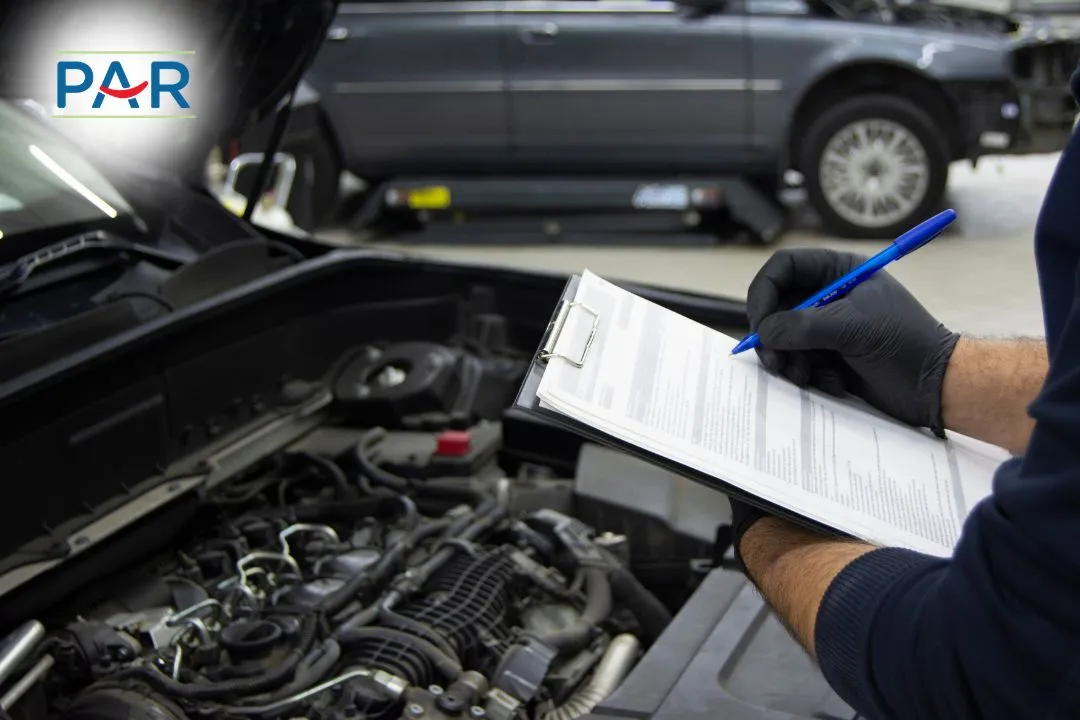
The practical test is the most important stage because it shows the candidate's real ability. Prepare an assessment form with a score for each aspect so the results are objective.
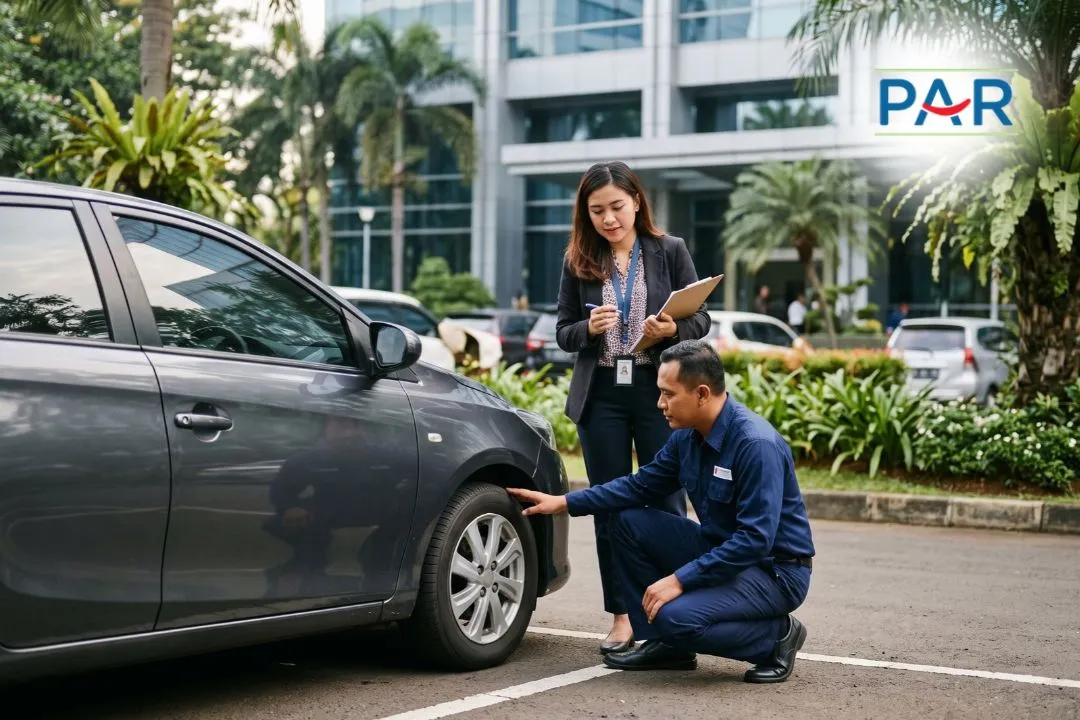
Observe whether the candidate inspects the vehicle on their own initiative, from tire pressure, lights, brakes, and oil to the completeness of the vehicle documents. This habit reflects responsibility toward company assets.
Test parallel parking, reverse parking, stopping and starting on an incline, and maneuvering in tight spaces such as office building basements.
Have the candidate drive on public roads in real traffic conditions for 30 to 60 minutes. Pay attention to how they keep a safe distance, use turn signals, respond to aggressive road users, and how smoothly they brake and accelerate. A driver who applies defensive driving techniques anticipates hazards rather than simply reacting once they appear.
Run a short role play, for example picking up a guest at the airport or dealing with a passenger who asks the driver to speed up because they are late for a meeting. This simulation shows how the candidate maintains etiquette while still putting safety first.
A psychological test helps measure emotional stability, concentration, and risk-taking tendencies. For positions that involve long-distance travel, an advanced medical check can confirm that the candidate is ready to work long hours.
The final interview is used to confirm the candidate's willingness to accept the work pattern, such as flexible hours, out-of-town assignments, or placement at another branch, while also outlining the compensation package.
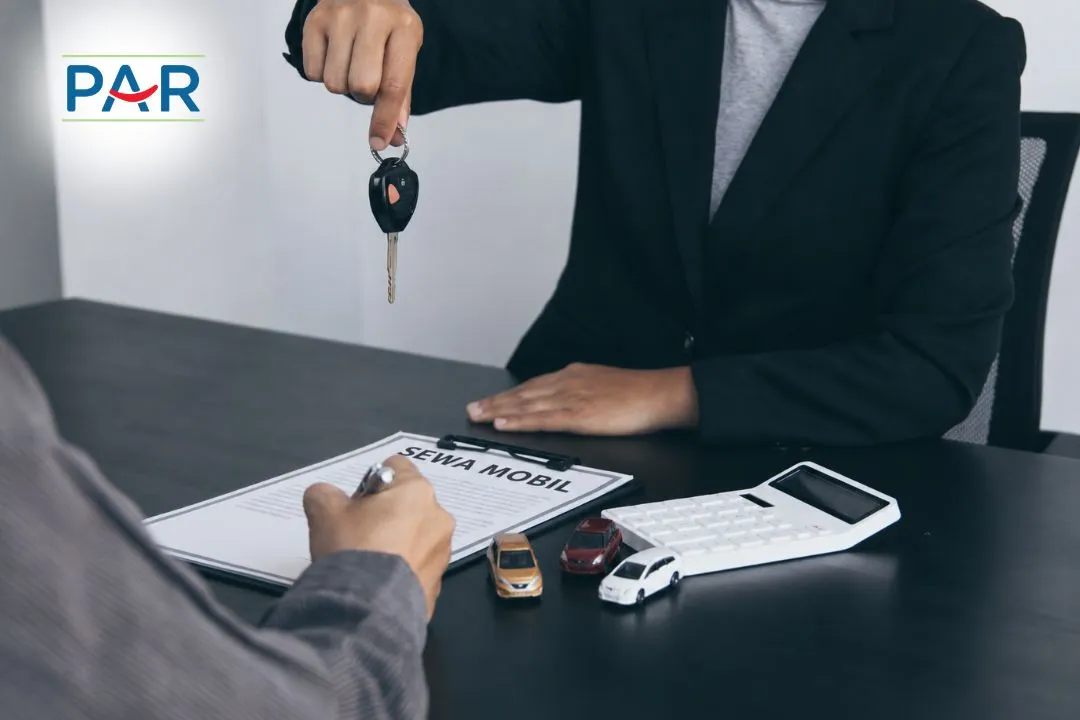
A clear employment contract protects both parties and prevents disputes later on.
Government Regulation (PP) No. 35 of 2021 distinguishes between a Fixed-Term Employment Agreement (PKWT) and an Indefinite-Term Employment Agreement (PKWTT). A time-based PKWT can last a maximum of five years, including extensions. A PKWT must also be made in writing in Indonesian and Latin script; otherwise, its status may convert to a PKWTT.
In addition to the identities of the parties, job title, wage, and employment period, a driver contract should include the following clauses:
Working hours and overtime. PP 35/2021 limits overtime to a maximum of 4 hours per day and 18 hours per week. Set out clearly how overtime is recorded and paid.
Operational allowances. Meal allowance, business travel allowance, and accommodation for out-of-town assignments.
Responsibility for the vehicle. Procedures for reporting damage, accidents, and traffic tickets, including who pays fines resulting from negligence.
A ban on personal use of the vehicle without written permission.
An obligation to keep confidential any information heard while on duty.
Enrollment in BPJS Ketenagakerjaan and BPJS Kesehatan (social security and national health insurance) in line with applicable regulations.
Clauses that violate regulations are null and void by law. The most common example is including a probation period in a PKWT, which is discussed further in the next section.
Under Article 60 of the Manpower Law, a probation period may only be applied to drivers with PKWTT status, for a maximum of three months, and wages during that period may not be below the minimum wage. Meanwhile, Article 12 of PP 35/2021 states that a PKWT may not require a probation period. If one is still included, that provision is null and void by law and the period still counts as working time.
For drivers with PKWT status, companies can still run an early evaluation in the form of an onboarding program, without using it as grounds for terminating the contract outside the provisions.
Use measurable indicators so that assessments are not subjective:
First 30 days: punctuality, compliance with procedures, and tidiness of daily reports.
60 days: consistency of fuel consumption, number of traffic violations, and vehicle condition.
90 days: feedback from service users, ability to solve problems on the road, and initiative in maintaining the vehicle.
If the vehicle is equipped with GPS or a telematics system, data on speed, harsh braking, and routes can serve as an objective basis for evaluation.
The following mistakes often make the recruitment process ineffective:
Relying on referrals from acquaintances without a practical test.
Not preparing an assessment form, so decisions become subjective.
Delaying the written contract.
Not having backup drivers to cover leave, sick days, or sudden resignations.
Assuming training ends once the driver is hired, when skills actually need regular refreshing.
These mistakes ultimately inflate company vehicle operating costs, from repairs to wasted working hours.
Hiring drivers in-house suits companies with stable needs and an HR team ready to manage the entire process. However, using a driver provider is usually more efficient if the company is in the following situations:
Driver needs fluctuate, for example increasing during certain projects or seasons.
Operations are spread across many cities or branches.
The HR team is limited, so selection, training, and administration take up too much time.
The company needs replacement drivers quickly when permanent drivers are unavailable.
The company wants drivers who are already trained and certified without building its own training program.
This outsourcing scheme is also regulated under PP 35/2021. Under Article 18, worker protection, wages, and welfare are the responsibility of the provider company. For short-term needs, daily driver rental is also an option worth considering.
What are the requirements to become a company driver?
They generally include an age that matches the SIM class, a valid SIM suited to the vehicle type, an SKCK, a health certificate, and driving experience. Companies also usually require candidates to pass a practical test and an interview.
Do office drivers need a SIM A Umum?
Not always. For private vehicles owned or rented by the company weighing up to 3,500 kg, a SIM A is sufficient. A SIM A Umum is required if the vehicle is registered as a public motor vehicle.
How long should the driver recruitment process take?
With all stages included, the recruitment process generally takes two to four weeks, depending on the number of applicants and how quickly documents are verified.
An effective way to hire company drivers starts with clear written qualifications, followed by SIM and track record verification, a layered selection process that emphasizes practical tests, an employment contract that complies with PP 35/2021, and a measurable early evaluation. This process does take time and resources, but it is far cheaper than the risk of accidents, asset damage, and loss of user trust caused by choosing the wrong driver.
However, not every company has the time and team to run all of these selection stages. Through PRIMA Driver Management, Prima Armada Raya provides professional drivers who have met competency standards and receive defensive driving training in stages, from basic and advanced competencies and specialized operational skills to regular refresher training. PRIMA Driver Management also serves as a training provider to upgrade the skills of your company's in-house drivers. Backed by a network across Indonesia and 24-hour customer service, your driver needs can be met without the hassle. Contact the Prima Armada Raya team today and get a professional driver solution tailored to your business needs. #PilihYangPRIMA
peraturan.bpk.go.id
reshulusungaiselatan.kalsel.polri.go.id
hukumonline.com
bplawyers.co.id